Kakobuy Carbon-Plated Shoe Claim Checks
Kakobuy Carbon-Plated Shoe Claim Checks
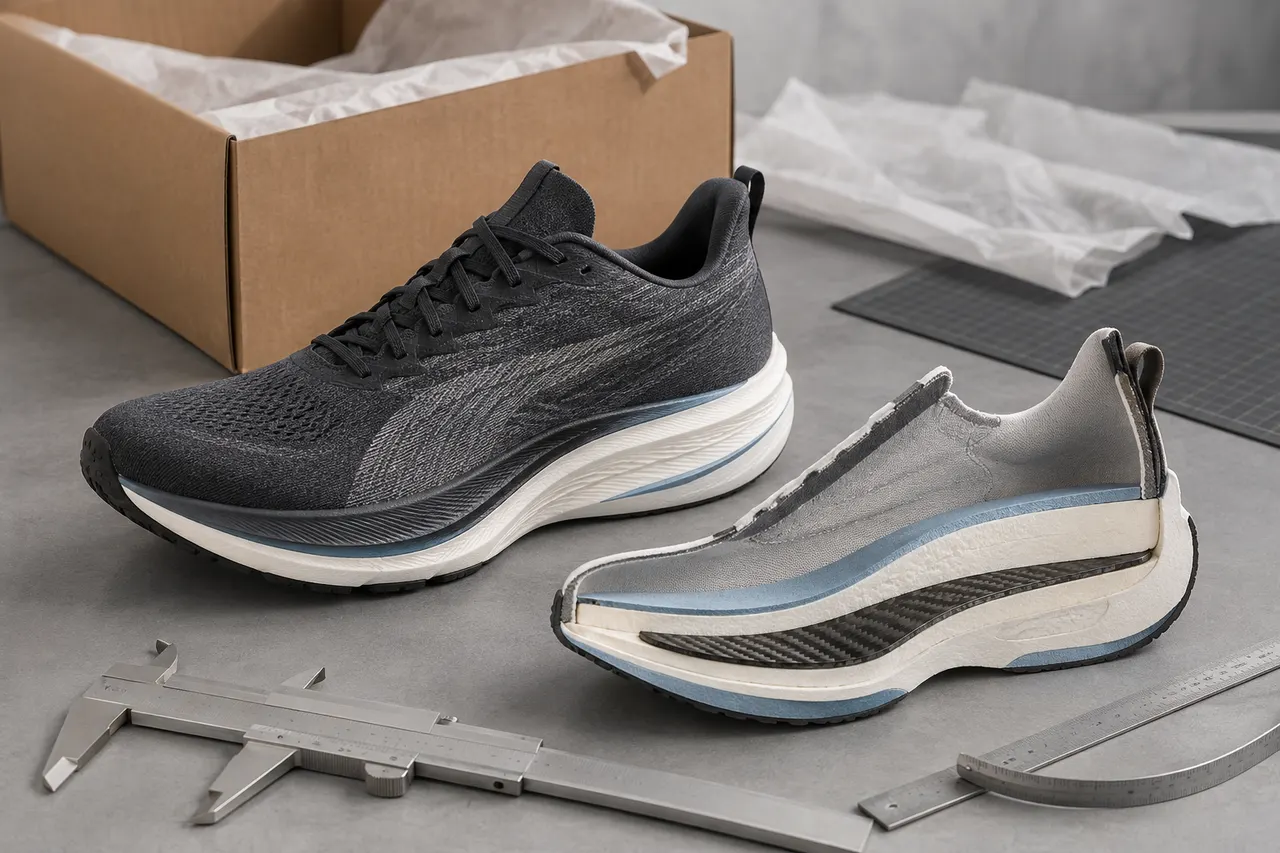
Carbon-plated running shoe product pages often put words like "carbon plate," "propulsion," "racing," and "lightweight" together, but these words do not prove each other. After seeing the marketing, the buyer's real problem is: Do the available materials prove that the shoe actually contains the claimed plate and structure, and is the size, weight, and version information sufficient to place an order?
This article provides an evidence verification method suitable for the Kakobuy purchasing agent process. After reading, you can classify product claims into proven, partially proven, and unproven, and then decide whether to order, switch styles, or hold off. This article is not suitable for judging authenticity, sports injury risk, competition compliance, or professional gait suitability; these issues require additional evidence from brand materials, competition rules, or professionals.
Editorial note: This article was generated by an automated editorial system based on the provided platform materials and evidence verification framework, and does not claim actual purchase, wear, or testing of the product. Product pages, prices, inventory, platform policies, and logistics conditions may change, and should be re-verified before actual operation.
First List the Carbon-Plated Shoe Claims to Verify
Don't start by asking "Is this a good shoe?" Instead, break down the claims on the product page into individual statements that can be verified. At least record the following:
Plate: Does the page say carbon plate, carbon fiber plate, composite plate, or just a suggestive "plate technology"?
Location: Is the plate full-length, forefoot, heel, or partially embedded?
Structure: Does the product claim to use a single-layer plate, double-layer plate, forked plate, or another specific form?
Sole: Are the midsole material, forefoot and heel thickness, drop, and outsole coverage clearly specified?
Weight: What size does the stated weight correspond to, is it per shoe or per pair, and is there an allowable tolerance?
Version: Could the colorway, batch, men's/women's version, upgraded version, and regular version use different configurations?
Sizing: Does the size chart provide foot length, insole length, or just common size conversions?
Save the original text, image location, and specification options together. If you only capture the two words "carbon plate," you may easily misinterpret the seller's qualified statement as a full commitment later. 🔎
The verification date should be recorded. The framework compilation date of this article is September 4, 2026; the price, inventory, version, and page status of any actual product should be based on the page re-opened on the day you place the order.
Distinguish Between Product Page Specs, Seller Description, and Buyer Inference
Information on the same page does not necessarily have the same evidentiary weight. It can be divided into three layers by source:
Product page specs: Information that explicitly lists material, plate location, thickness, weight corresponding to size, or model.
Seller description: Statements in the title, detail copy, promotional posters, and customer service replies.
Buyer inference: Guesses based on sole curvature, side profile, name, or appearance.
The appearance of "carbon-plated running shoes" in the product title only proves the seller uses this marketing name; it cannot alone prove plate composition, coverage, or stiffness. A side profile with sharp lines also cannot directly prove the presence of a full-length carbon fiber plate inside.
Buyer reviews and social discussions can help identify questions to ask, but cannot automatically upgrade to material proof. Even if someone describes it as "bouncy" or "stiff," the feel could come from the midsole foam, sole geometry, outsole thickness, or size difference, not just the plate.
Check Whether the Plate Name, Location, and Structural Diagram Are Complete
A relatively complete plate claim should at least answer three questions: What is it called, where is it placed, and in what form does it exist?
First check if the name is specific. "Carbon element," "carbon technology," "propulsion plate," and "carbon plate" are not synonyms; "carbon fiber plate" does not automatically indicate a full-length structure. If the product page uses multiple names, ask the seller to clarify whether these words refer to the same component.
Then check the location. Full-length, forefoot, and partial plates may result in different sole structures and feel, and cannot be substituted by a diagram without range annotations. If the diagram only shows an outline without shoe model, version, or corresponding location, the evidence is still incomplete.
Finally check if the structural diagram belongs to the current product. The shoe model, SKU, or version should be identifiable in the diagram and correspond to the current option. Generic technical posters, images of other colorways, or cross-sections without model identification can only serve as clues to be verified.
When the seller cannot provide material documentation, don't immediately claim the marketing is false, but keep the status as "insufficiently proven." This is more reliable than making a positive or negative judgment based on the name. 🧩
Look for Observable Structural Evidence from Sole and Side Images
Warehouse photos are suitable for confirming appearance information, not for replacing destructive testing or laboratory material identification. According to the provided Kakobuy inspection instructions, routine checks mainly verify style, quantity, color, size, model, and other appearance information. Therefore, buyers should limit photo requests to what the warehouse can observe and record.
You can request the following images:
Full side view of both shoes, with the camera roughly parallel to the sole, to check if the sole thickness profile is consistent.
Top-down view of the sole, to confirm outsole segmentation, grooves, and any visible structural positions.
Close-ups of forefoot and heel, to check for adhesion, obvious deformation, cracking, or left-right asymmetry.
Tongue size label and shoe box label, to verify SKU, size, colorway, and version information.
Interior photo after removing the insole, but only request if the warehouse allows and it does not affect return conditions.
Clear photos of each shoe weighed separately, with the scale zeroed and the weight unit visible.
These images can support a judgment of "appearance consistent with the page," but cannot prove that the hidden plate is definitely made of carbon fiber, nor can they prove its stiffness, energy return efficiency, or durability. Unless the product has a visible window, ordinary side photos usually only show sole geometry, not the complete internal structure.
Do not ask the warehouse to bend, cut, or disassemble the sole to look for a carbon plate. Such operations may damage the product and may affect return eligibility. If destructive verification is necessary to confirm the material, the claim should be classified as unable to be fully verified by the existing process before purchase.
Check the Source of Size Chart, Weight Data, and Version Information
Size and weight seem like numbers, but are actually most prone to misinterpretation due to different measurement standards.
When checking the size chart, first confirm whether the length field represents foot length, insole length, or internal shoe length. The three cannot be directly interchanged. When only common regional size conversions are provided without centimeter data, do not order based solely on your usual shoe size; measure both feet, use the longer one as a preliminary reference, and confirm the seller's suggested allowance.
Weight data must be tied to specific conditions. For example, "about 220 grams" lacks at least the applicable size, per shoe or per pair, whether the insole is included, and possible batch variations. If the warehouse weighing result differs significantly from the page, first check the size, unit, and measurement object, rather than immediately attributing the difference to authenticity.
Version information needs to be cross-checked with the product options, shoe box label, tongue label, and detail page. The page title may say "upgraded version," but different options may correspond to different SKUs or configurations. Order notes cannot replace the selected SKU; the final verification should be based on the color, size, and version options in the order. 📏
Create a Claim and Evidence Status Table
It is recommended to record only claims that can influence the purchase decision. The status meanings below are a verification framework and do not indicate that any specific shoe has passed inspection.
Claim | Acceptable supporting materials | Cannot serve as sole proof | Suggested status |
|---|---|---|---|
Uses carbon fiber plate | Clear specs for current model, structural materials linked to model, or traceable seller confirmation | Title keywords, sole curvature, buyer feel | Proven, partially proven, or unproven |
Full-length plate structure | Structural diagram or spec indicating coverage and corresponding to current version | Generic cross-section without range annotation | Proven or unproven |
Single shoe weight | Data specifying size, unit, and measurement method; warehouse weighing photo if necessary | "Lightweight" claim without size | Verified or unclear standard |
Sole thickness and drop | Parameters indicating measurement location and applicable size | Visual estimate from side photo | Verified or missing standard |
Current version matches page | SKU, model number, shoe box label, and tongue label correspond | Similar colorway or "new style" in title | Consistent, conflicting, or to be confirmed |
"Partially proven" should have a clear meaning. For example, if the page supports "there is some plate inside the shoe" but not "full-length carbon fiber plate," record them separately instead of giving the whole product a vague "basically credible."
Turn Evidence Gaps into Photo Requests or Questions
When evidence is insufficient, do not send open-ended questions like "Help me see if it's a carbon plate." Warehouse staff can usually only report visible facts, and sellers are more likely to answer specific, verifiable questions.
You can rewrite gaps into the following requests:
Please confirm the SKU for the current color and size, and photograph the shoe box label and tongue labels of both shoes.
What is the full name of the plate as written on the page? Is it full-length, forefoot, or partial?
Is the structural diagram specific to the current SKU and version? If so, please provide the original image with model information.
What size does the stated weight correspond to, per shoe or per pair?
If allowed and does not affect returns, please photograph the side profiles of both shoes, soles, and close-ups of forefoot and heel.
If weight affects the decision, ask if each shoe can be weighed separately, with the unit and scale reading visible in the photo.
Is the length in the size chart foot length, internal shoe length, or insole length? What is the measurement method?
Kakobuy's value in this process is purchasing agent service, post-warehouse appearance check, and international forwarding, not issuing material certification on behalf of the seller. Additional photos can reduce the risk of wrong version, size, or obvious defects, but cannot fill all material evidence gaps.
You should also check the return window and exceptions before proceeding. According to the provided platform materials, returns are usually supported within 120 hours after warehousing, but items that are custom, restricted, or have had packaging, tags, or accessories removed at the buyer's request may not be eligible. This policy is highly variable, and this article only records its informational status; for actual orders, you must re-check the applicable rules on the day of warehousing and confirm the start time. ⏱️
Make Order, Switch, or Hold Decision Based on Use Case
The final decision should not be based solely on "does it have a carbon plate," but also on whether the evidence strength matches your purpose and loss tolerance.
Situations where you may consider ordering:
Your use is daily wear or general training, and you do not depend on a specific plate structure.
The SKU, size, and version correspond, and key appearance evidence shows no obvious conflict.
You accept that plate composition remains uncertain and cannot be resolved by warehouse photos.
The product cost, domestic shipping, international shipping, and possible customs duties or taxes are within budget.
Situations where switching styles is more appropriate:
Current product evidence is insufficient, but another style can provide specs and structural materials corresponding to the specific SKU.
The size chart is unclear, but an alternative provides foot length or internal length basis.
Different parts of the page conflict on plate coverage, weight, or version, and the seller cannot clarify.
Situations where holding off is recommended:
Your core purpose depends on a full-length carbon fiber plate, precise weight, or competition eligibility, but existing evidence cannot prove these conditions.
The product page only has marketing words, with no specs, structure, or version association for the current model.
Warehouse photos reveal SKU, size, left-right shoe, or appearance inconsistencies with the order.
The return window, non-returnable conditions, or total international shipping cost has not been confirmed.
You need professional sports medicine advice, laboratory material identification, or competition compliance conclusions.
Cost judgment should also cover the entire process. According to the provided platform materials, total cost may include product price, domestic shipping in China, international shipping, and customs declaration fees; destination country taxes and carrier route conditions should be verified before submitting the package. Shoe boxes may increase volumetric weight, but removing packaging may affect protection or return conditions, so do not request packaging removal prematurely just to estimate shipping savings.
This method does not save a pre-guaranteed fixed amount, but reduces losses from returns, repurchases, and international shipping due to wrong version, size, or insufficient evidence. The added cost is communication time, possible additional photo fees, and decision pressure within the warehousing window. It is most suitable for buyers who value specific structures, are willing to keep verification records, and can wait for supplementary evidence; if you need material authenticity certification, precise performance testing, or unconditional guarantees, it is not recommended to rely solely on product pages and warehouse photos for decisions. ✅
Agent Platform Shopping FAQ
1. What should first-time kakobuy users pay attention to?
Those new to kakobuy and using the agent service through the spreadsheet entry generally receive a shipping discount coupon specially prepared for new users. At the same time, you should also read the step-by-step shopping tutorial provided by kakobuy for beginners.
Browse our latest products and find your next favorite item.